


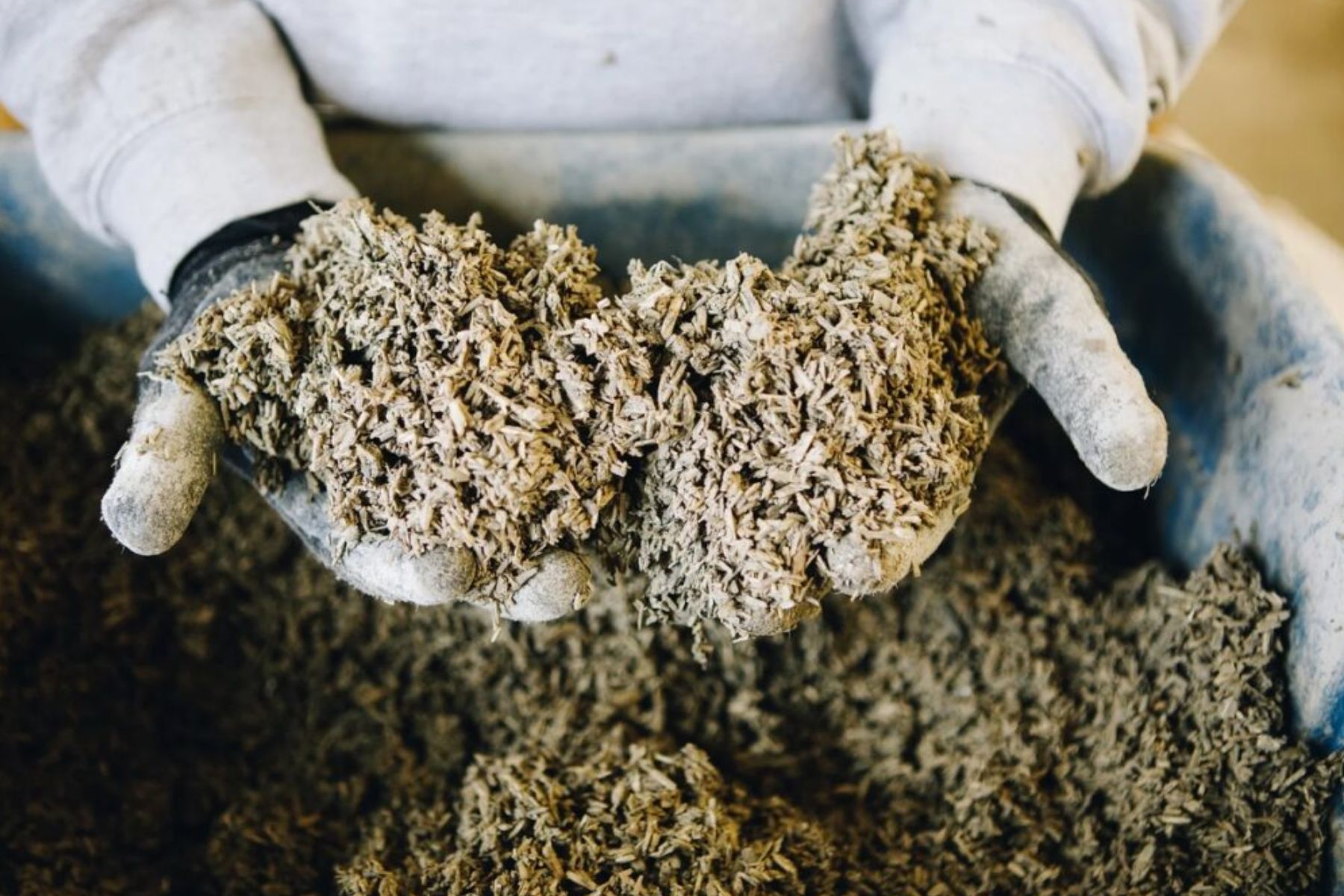
At the centre of it all is hemp, a crop with a complicated past and an unexpectedly promising future. Once widely grown across Britain, hemp fell out of use in the 1920s when it became entangled in laws aimed at its psychoactive relative, cannabis. Unlike that cousin, industrial hemp contains almost no THC, the compound responsible for a high. What it does offer instead is remarkable versatility.
The plant’s tough, woody core can be turned into a building material that is solid, fire resistant and breathable. Known as hempcrete, it is created by combining hemp shiv, which are small wood like chips from the stem, with lime and water. Once dried, the mixture forms a lightweight but durable material that stores carbon rather than releasing it.
Ian Wilkinson, co founder of FarmED in West Oxfordshire, describes hemp as a “win win crop.” It grows quickly, needs very little fertiliser, and naturally suppresses weeds, reducing the need for chemicals. For farmers, it opens up a new source of income, while builders gain access to a more sustainable resource.
“Hemp ticks a lot of boxes,” Wilkinson says. “Now we just need to build the market so farmers have a reason to grow it.”
For centuries, hemp was a staple in Britain, used to produce rope, sails, clothing, oil and food. Henry VIII even required farmers to grow it, imposing fines on those who did not. Today, hemp is far more widely used in construction across Europe than in the UK, though that may be starting to shift.
FarmED is one of several organisations involved in a £6 million research project exploring how crops like hemp can improve soil health, help farmers diversify and address climate change. To demonstrate its potential, a barn is being constructed using hemp materials throughout, including hempcrete walls, hempboard panels and hemp fibre insulation.
Architect Tim Tasker points to one of hemp’s biggest advantages, its speed. “It takes two to three acres of hemp to build a family home,” he explains. “And that crop grows within a single season, in about three months. If you planted spruce trees on the same land, you would be waiting 25 years.”
Developers are beginning to take notice. Greencore Homes plans to build 10,000 homes using hempcrete over the next decade. One early example, the Canopies development near Didcot, is already underway, with thousands more homes in progress.
There are still obstacles to overcome. In the UK, growing hemp requires a licence because it is classified under the same legislation as narcotics, despite having no meaningful drug content.
“It is like putting a chihuahua and a rottweiler in the same category just because they are both dogs,” says Greencore co founder Ian Pritchett.
For now, the government has no plans to remove the licensing requirement. But as the demand for sustainable building materials grows, pressure is building to reconsider.
If that change comes, hemp could once again become one of Britain’s most valuable crops, helping to build a greener future from the ground up.
